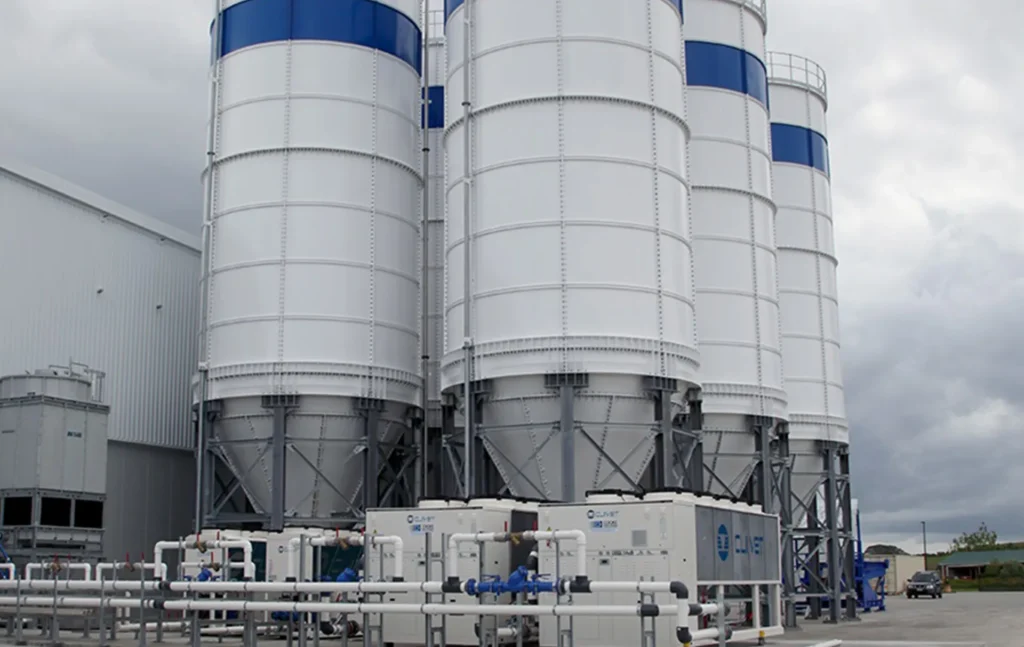
How does a silo work? Structure, process and advantages of industrial storage
Introduction: The essential role of silos in industrial storage
The storage of bulk materials is a fundamental necessity in numerous sectors, from agriculture to the chemical and construction industries. Silos represent the ideal solution to ensure safe and efficient management and storage of products such as cement, liquids, grains, feed, pellets, sugar. Thanks to their structure designed to optimize space, these storage systems play a key role in the production efficiency of companies.
But how does a silo work? Its operation is based on a well-defined process, which includes three main phases: loading, storage and unloading. Each step is essential to preserve the properties of the stored material, ensuring quality, safety and practicality.
A well-designed silo, such as those manufactured by Poggi Spa, not only optimizes material flow, but also reduces the risk of contamination and deterioration. In this article we will explore how a silo works, its main components and the advantages it offers companies, with a focus on silo manufacturing.
Silo structure: essential components and construction materials
A silo is much more than a simple container. Its structure is designed to withstand internal and external pressures, manage loading and unloading efficiently and protect the material from weather conditions or contamination.
The main components of a silo include:
- Main body – the structural part that contains the material, made of steel or other materials, depending on the application
- Loading system – it can be mechanical (through silo screw conveyors) or pneumatic, depending on the type of material
- Ventilation and humidity control systems – essential for storing sensitive products such as those used in grain silos or flour silos
- Level sensors – devices that monitor the quantity of material inside to avoid overloads or waste
- Unloading system – includes dosing valves, screw conveyors or vibrating extractors, depending on the material handled
A crucial aspect in choosing a silo is the material it is made of, which must be selected according to the type of material to be stored. A well-designed silo, such as those by Poggi Spa, is custom-built to adapt to the specific storage requirements of each company.
How does a silo work? The three-phase process
The core of a silo lies in its operating process, which may vary depending on the type of stored material, but generally follows three main phases: loading, storage and unloading.
1. Material loading
The first step is the filling of the silo, which must take place efficiently and safely. The material is transported into the silo through screw conveyors, belt conveyors or pneumatic systems, depending on the density and particle size of the material. For example:
- In grain silos, loading takes place through bucket elevators or spiral screw conveyors to avoid damaging the grains
- In cement silos, pressurized pneumatic pipes are used to avoid dust dispersion and keep the material dry
- In pellet silos, the material is loaded through mechanical conveying systems that preserve its integrity
During this phase it is essential to ensure an even distribution of the material inside the silo, to avoid accumulations that could compromise unloading or damage the structure. A well-designed silo by Poggi Spa includes optimized filling systems to prevent compaction problems and guarantee a regular flow.
2. Storage: protection and preservation of the material
Once loaded, the material must be stored in an environment that guarantees its quality, stability and safety over time. For this reason, storage represents a critical phase of the entire production process: uncontrolled conditions can compromise material performance, generate waste or slow down the production line. Modern storage systems integrate humidity control, aeration, mixing and continuous monitoring solutions, adapting to the specific requirements of different applications.
3. Controlled unloading and efficient material handling
The final phase is the withdrawal of the material from the silo, which must take place in a smooth and controlled manner. Unloading systems may vary:
- In cement silos, dosing valves are used to release the required quantity of product
- In pellet silos, the material descends by gravity and is regulated by silo vibrators.
- In food silos, unloading takes place through pneumatic conveying systems to ensure hygiene and safety.
A well-designed silo, such as those supplied by Poggi Spa, is equipped with intelligent monitoring technologies, which make it possible to optimize unloading times and reduce waste.
Conclusion
Understanding how a silo works is essential to optimize industrial processes and guarantee high operational efficiency. Poggi Spa offers innovative industrial storage solutions, custom-designed for every sector.