E-MAIL
info@poggi-spa.com

CONTACT US
+39 0575 511378

STATIC CLARIFIERS

Static process, simplified management, consistent results

STATIC CLARIFIERS S-DEC SERIES

Features

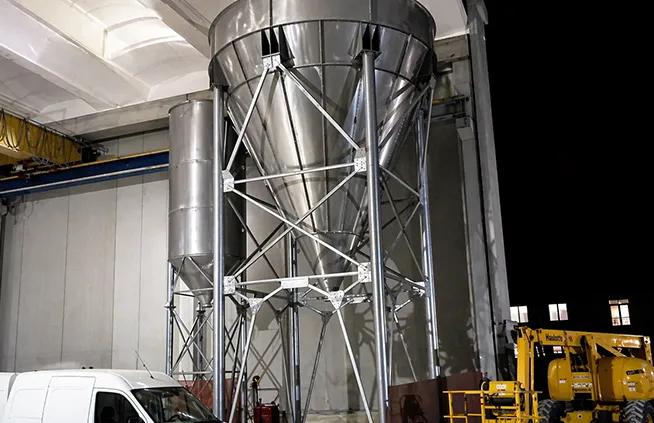
Static clarifiers, also defined as static sedimentation units, are designed to provide a simple, reliable, and continuous solution for solid-liquid separation in industrial processes. Based on a natural sedimentation principle (gravity force), they operate without moving parts, reducing operating costs and ensuring maximum long-term operational continuity.

Components in contact with the material can be manufactured with different finishes, depending on the characteristics of the product to be treated.

Thanks to their simple design and quick installation, Poggi static clarifiers can be easily integrated into new or existing systems. They can be directly connected to extraction pumps, sludge silos, filter presses, or collection tanks, making them ideal for aggregate washing plants, industrial wastewater treatment, environmental recycling, and many other applications.

Versatile, robust, and efficient, they represent a smart choice for those seeking reliability, simplified management, and a low-energy solution.

Static clarifiers or sedimentation units represent an effective and efficient solution for water treatment, significantly improving water quality through a simple and natural separation process.

Poggi static clarifiers, always the professional choice

> Fixed structure, galvanized or painted, with customizable contact parts based on the treated material > Natural sedimentation system, without moving parts and with reduced maintenance requirements > Suitable for aggregate washing plants, industrial wastewater treatment, and environmental recycling

> Easy installation and integration with pumps, sludge silos, filter presses, or collection tanks, enabling continuous and automatable sludge management

> Low energy consumption solution, ideal for systems requiring reliability and simplified operation

Application versatility

One solution, multiple sectors

The effectiveness of a static clarifier or static sedimentation unit depends not only on the operating principle, but above all on build quality and long-term reliability. Poggi static sedimentation units are designed to meet these requirements through detail-oriented engineering: every component is optimized to enhance treatment performance, simplify integration into existing lines, and minimize operational downtime. A concrete solution to ensure process stability even under variable or unpredictable conditions.

> Fixed structure, galvanized or painted, with customizable contact parts based on the treated material

> Natural sedimentation system, without moving parts and with reduced maintenance requirements

> Suitable for aggregate washing plants, industrial wastewater treatment, and environmental recycling

> Easy installation and integration with pumps, sludge silos, filter presses, or collection tanks, enabling continuous and automatable sludge management

> Low energy consumption solution, ideal for systems requiring reliability and simplified operation

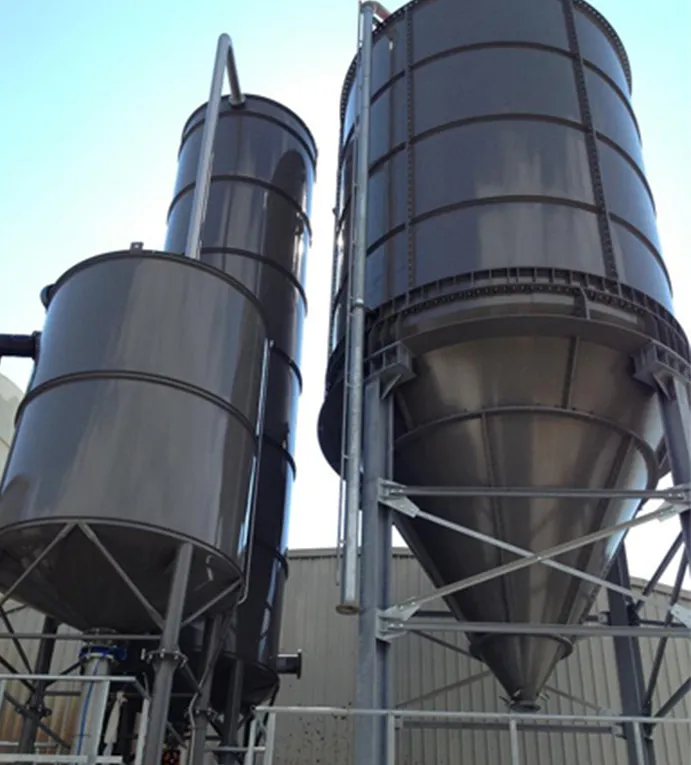
Static clarifier Poggi spa

Operation and safety

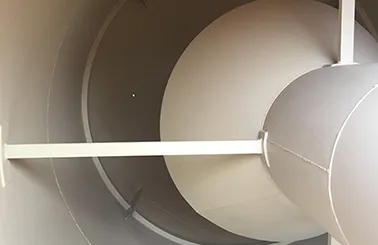
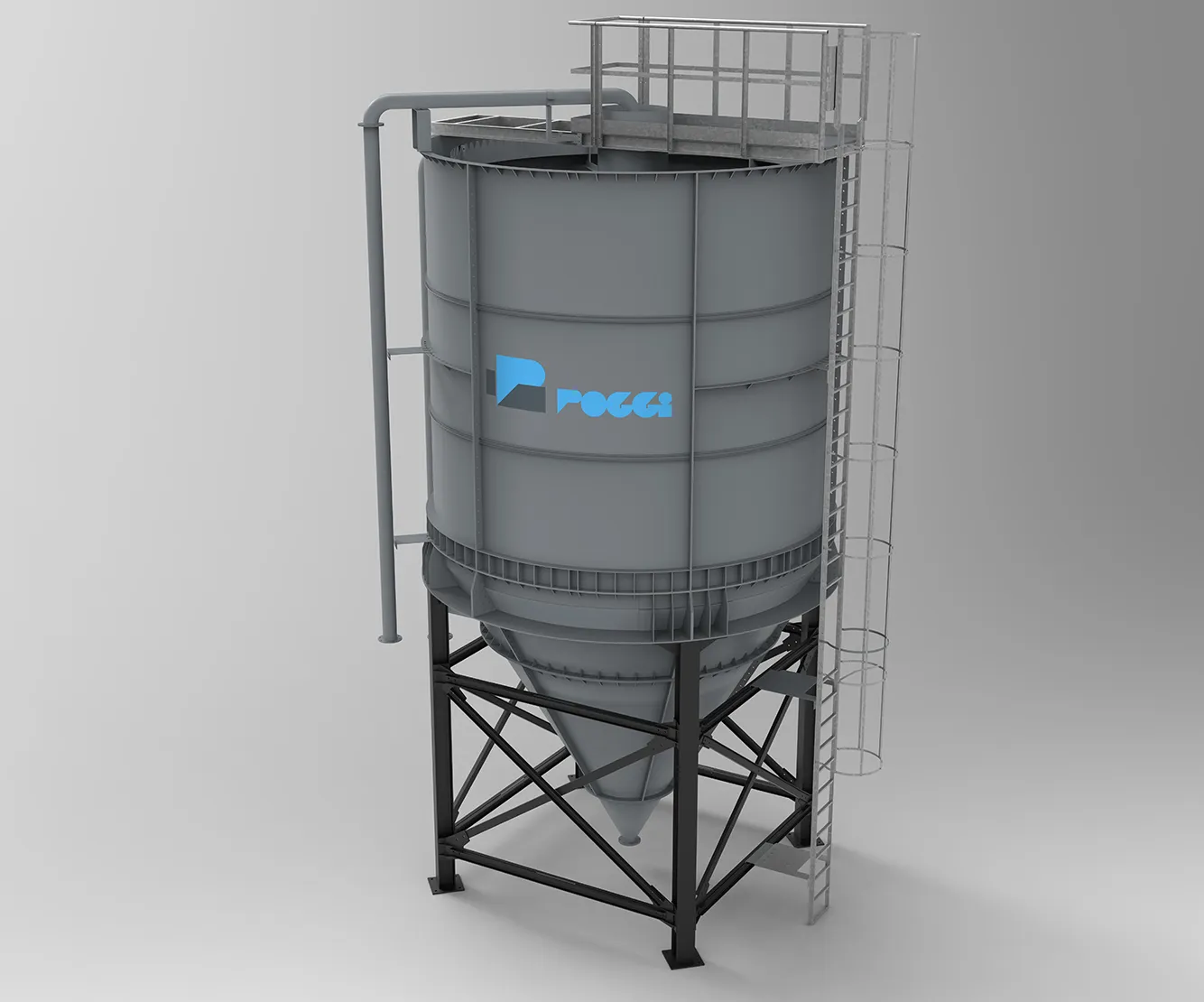
In static clarifiers, the water to be treated is introduced at the top of the unit and conveyed into a central vertical cylinder, also known as a stilling pipe, which extends to the bottom of the tank. This system guides the flow downward and controls its upward movement, ensuring uniform distribution and a stable upward flow regime.

In this way, turbulence is reduced, progressive sedimentation of solid particles is promoted, and separation efficiency is improved. Sludge accumulates at the conical bottom, from which it can be discharged through a lower outlet.

The clarified water rises to the top and is collected through overflow channels positioned along the perimeter. From here, it can be directed to subsequent treatment stages or to storage tanks. The process operates continuously.

static-clarifiers

CLARIFIED WATER COLLECTION

At the top of the static clarifier, the weir is installed a perimeter overflow system designed to collect clarified water at the end of the separation process. As the water slowly rises through the tank under controlled flow conditions, it reaches the weir uniformly, without turbulence, ensuring a steady and continuous collection of the treated liquid.

From the weir, the clarified water is conveyed into a discharge pipe located outside the clarifier, through which it can be directed to storage tanks, process recirculation, or subsequent treatment stages. The geometry and configuration of the weir are designed to maintain a constant level and maximize the effective overflow surface, optimizing the overall efficiency of the system.

SLUDGE CONE AND FLOCCULANT DOSING INLET

> In the discharge cone, located at the bottom of the static clarifier, the solids separated from the upward flow accumulate. This area represents the point of highest concentration of the settled material and can be configured for the controlled introduction of flocculants.
The addition of flocculants, through dosing systems available on request, improves separation efficiency by promoting the aggregation of fine particles and accelerating sedimentation. This solution is particularly effective in the presence of light sludge or low-density suspensions and allows optimized discharge and management of residuals.

DIFFUSER CYLINDER

> At the base of the central cylinder, where water enters the static clarifier, the diffuser cylinder is installed—a key component designed to ensure uniform and controlled distribution of the incoming flow.

The diffuser slows down and equalizes the upward flow, eliminating direct currents that could compromise sedimentation. Thanks to this geometry, the water begins to rise evenly and at a reduced velocity, creating ideal conditions for the separation of solid particles.

The diffuser cylinder therefore helps stabilize the internal flow, reduce turbulence, and increase the efficiency of the clarifier, even in the presence of variable loads or particularly fine materials.
Material flow management

SLUDGE DISCHARGE

SEDIMENTATION SYSTEM
Inside the static sedimentation unit, the reduced flow velocity allows natural settling of suspended solids. Sludge progressively accumulates at the bottom, separating from the clarified water.

LOWER DISCHARGE OUTLET
The settled materials are evacuated through a discharge outlet located at the bottom of the clarifier. The system is designed to be directly connected to pumps, sludge silos, or dewatering systems.

SLUDGE FLOW MANAGEMENT
The discharge can be continuous or cyclically controlled, depending on the flow rate and downstream process. The operator can regulate emptying through valves, timers, or remote controls, according to plant requirements.

PROCESS STABILITY
The absence of moving parts ensures operational continuity, minimizing failures, blockages, and maintenance requirements.

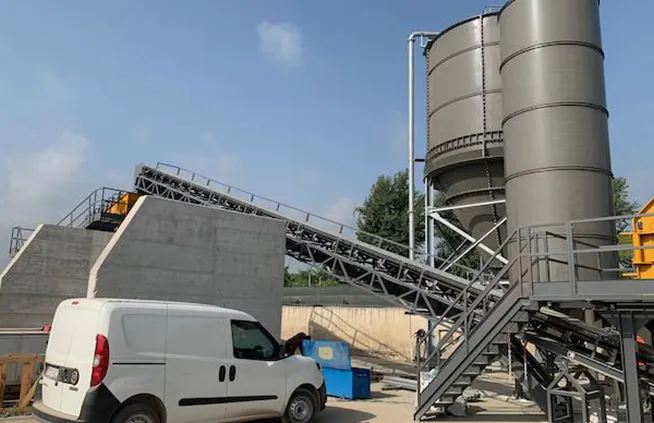
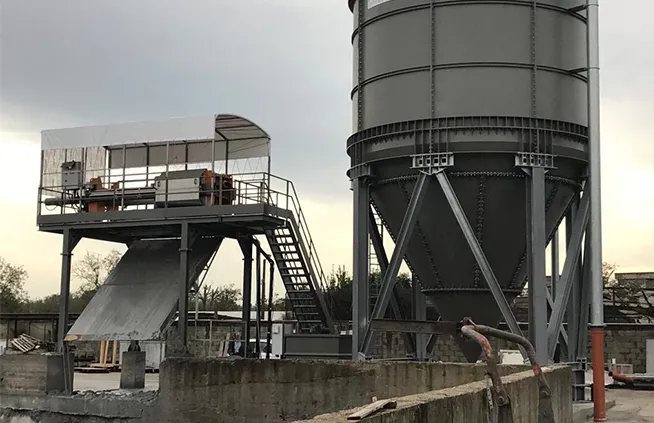
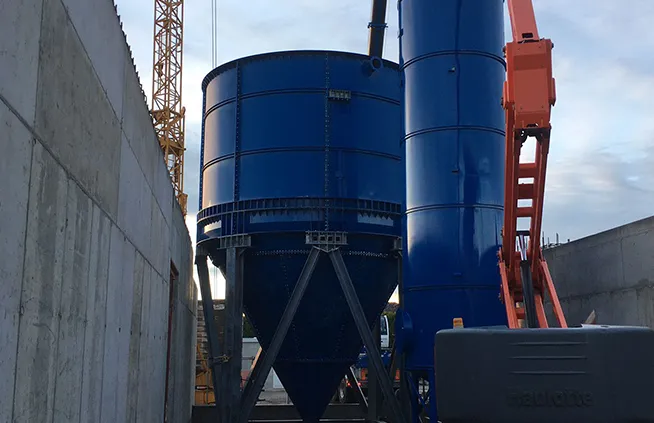
Static clarifier manufactured by Poggi spa

SYSTEM INTEGRATION

CONNECTION TO EXTRACTION PUMPS
The bottom of the clarifier can be configured for direct connection to submersible pumps or sludge transfer pumps, facilitating feeding to downstream systems.

FILTER PRESS COMPATIBILITY
The sludge flow discharged from the clarifier can be conveyed into a storage tank with an agitator placed upstream of the filter press, making the system ideal for continuously feeding dewatering units and reducing disposal volumes.

CLARIFIED WATER RETURN
The treated water can be conveyed into storage tanks or reintroduced into the production cycle, efficiently and sustainably closing the washing or treatment loop.

OPERATIONAL SAFETY AND CONTROLLED FLOW
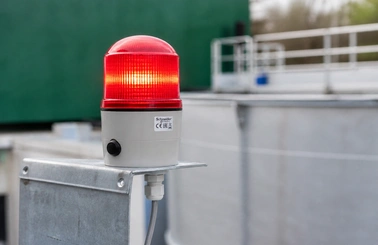
For high-capacity systems, safety accessories are available such as shut-off valves, controlled opening sensors, and anti-clogging systems, ensuring operational continuity and regulatory compliance.

MANAGEMENT AND OPERATIONAL CONTROL

MONITORING SYSTEM
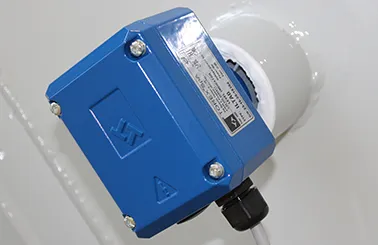
On request, level indicators, probes, and sensors can be integrated for fill level control and sludge density monitoring.

AUTOMATION AND REMOTE INTERFACE
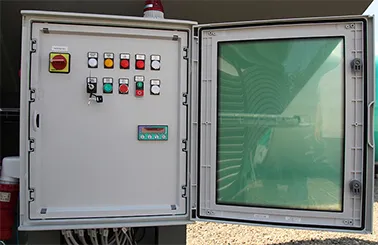
On request, Poggi static clarifiers can be connected to centralized control systems for automatic management of discharge valves, cycle logging, and interaction with pumps or silos.

SIMPLIFIED MANUAL OPERATION
For non-automated systems, the clarifier can be equipped with manual discharge valves positioned for easy access and designed for frequent and safe use. This solution is ideal for mobile or low-complexity systems, where mechanical reliability and ease of use without electronics are the priority.

Technical details

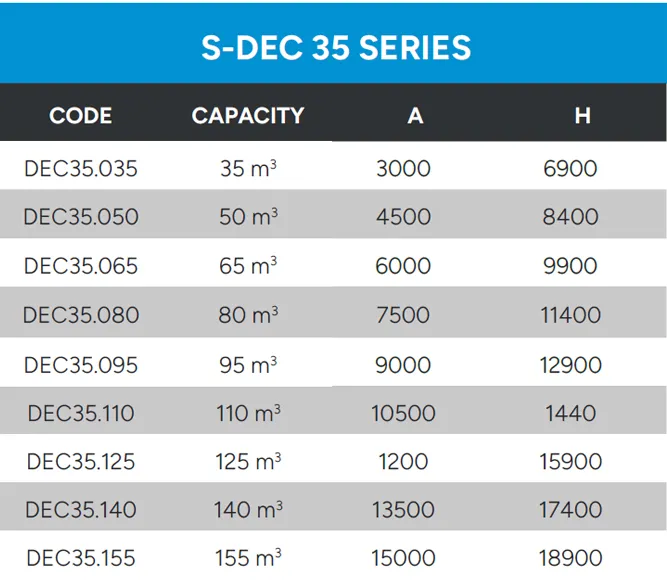
Static Decanter Technical Data S Dec 35
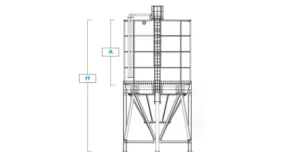
Static Decanter Technical Drawing
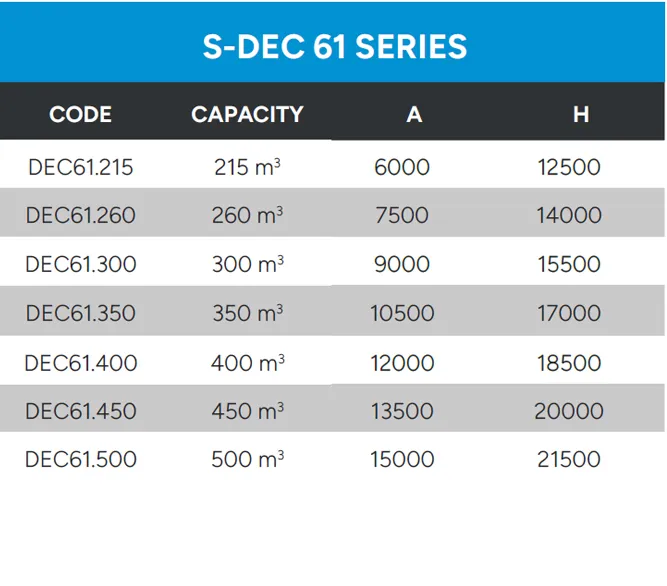
Static Decanter Technical Data S Dec 61
Static Decanter Technical Drawing
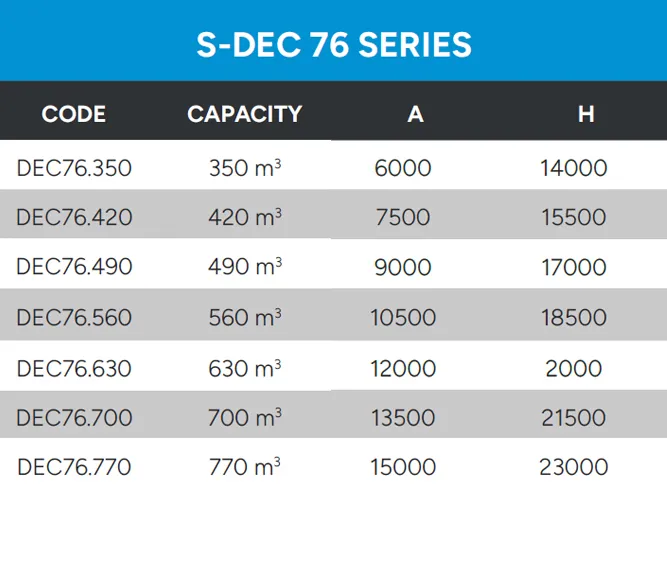
Static Decanter Technical Data S Dec 76
Static Decanter Technical Drawing
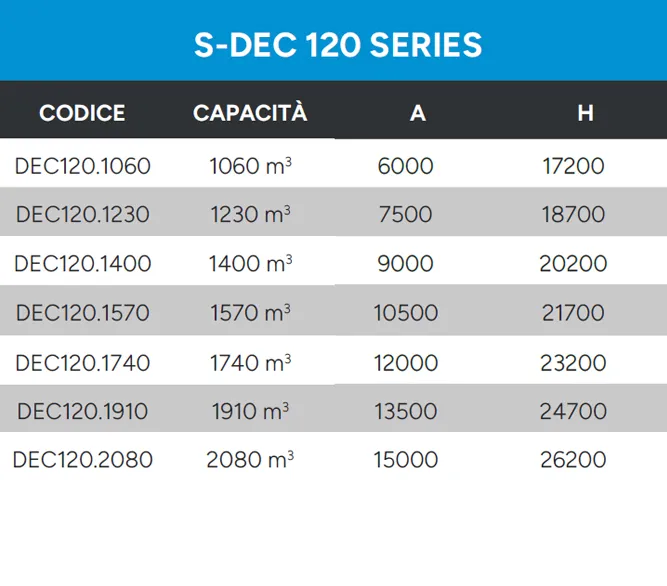
Static Decanter Technical Data S Dec 120
Static Decanter Technical Drawing
Static Decanter Technical Data S Dec 120
Static Decanter Technical Drawing

ACCESSORIES AND OPTIONS

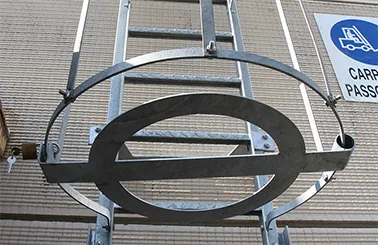
A complete range of accessories and options to customize each product. Measurement, filtration, safety, extraction, and control systems allow clarifiers to be adapted to specific operational requirements, ensuring maximum efficiency and continuous operation.

Contact us

Subscribe to the newsletter

This site is registered on wpml.org as a development site. Switch to a production site key to remove this banner.